Industrial 3D printing, engineered to perform.
Snapfab leads in industrial 3D printing because we treat every print like a production part. Unlike most 3D printing companies, we put an engineer on every order: DFM review catches problems before they hit the build plate. Our industrial 3D printing service runs three platforms that cover most engineering needs (SLS, MJF, and SLA) and picks by what the part has to do.
SLS: production-grade nylon, no supports required.
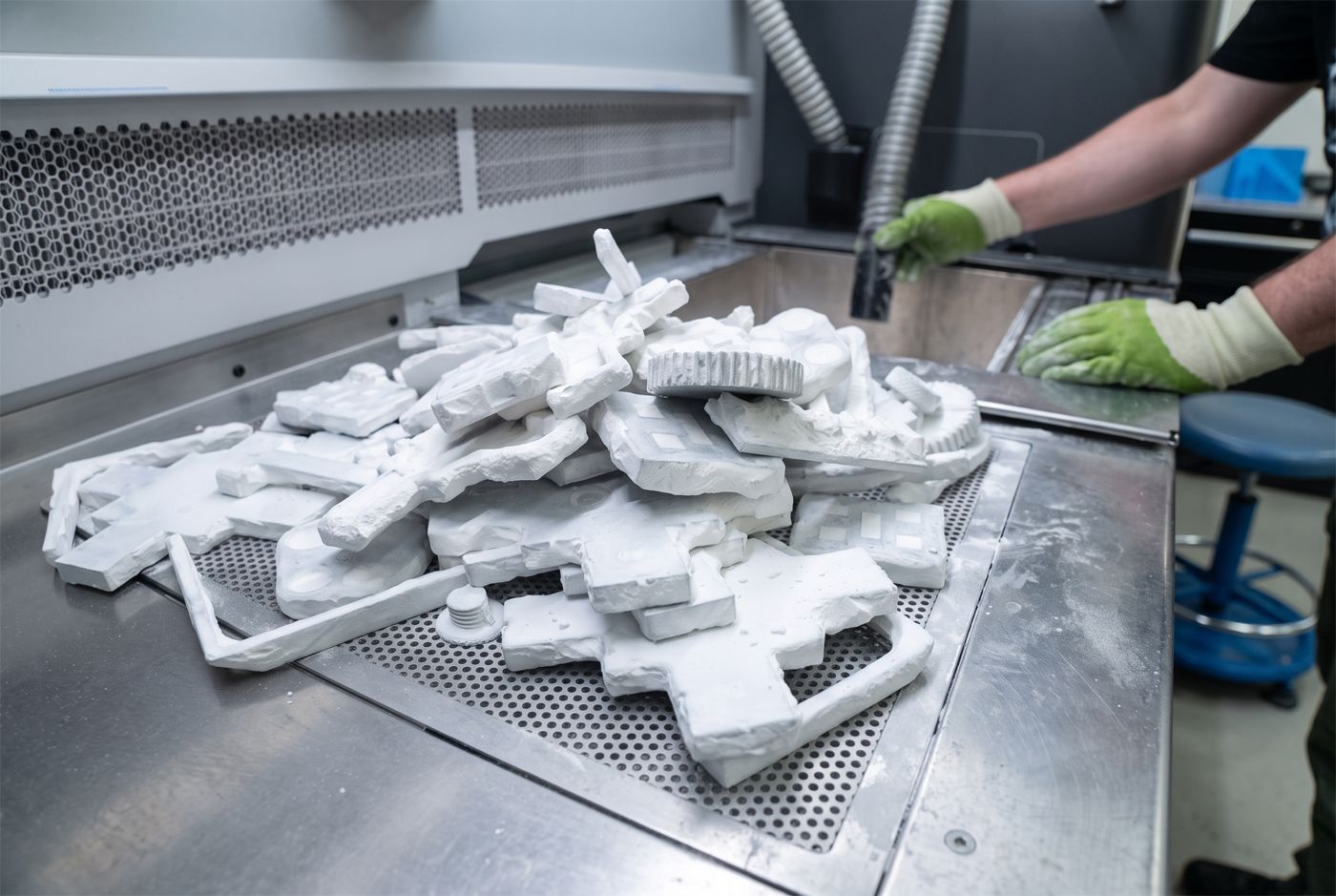
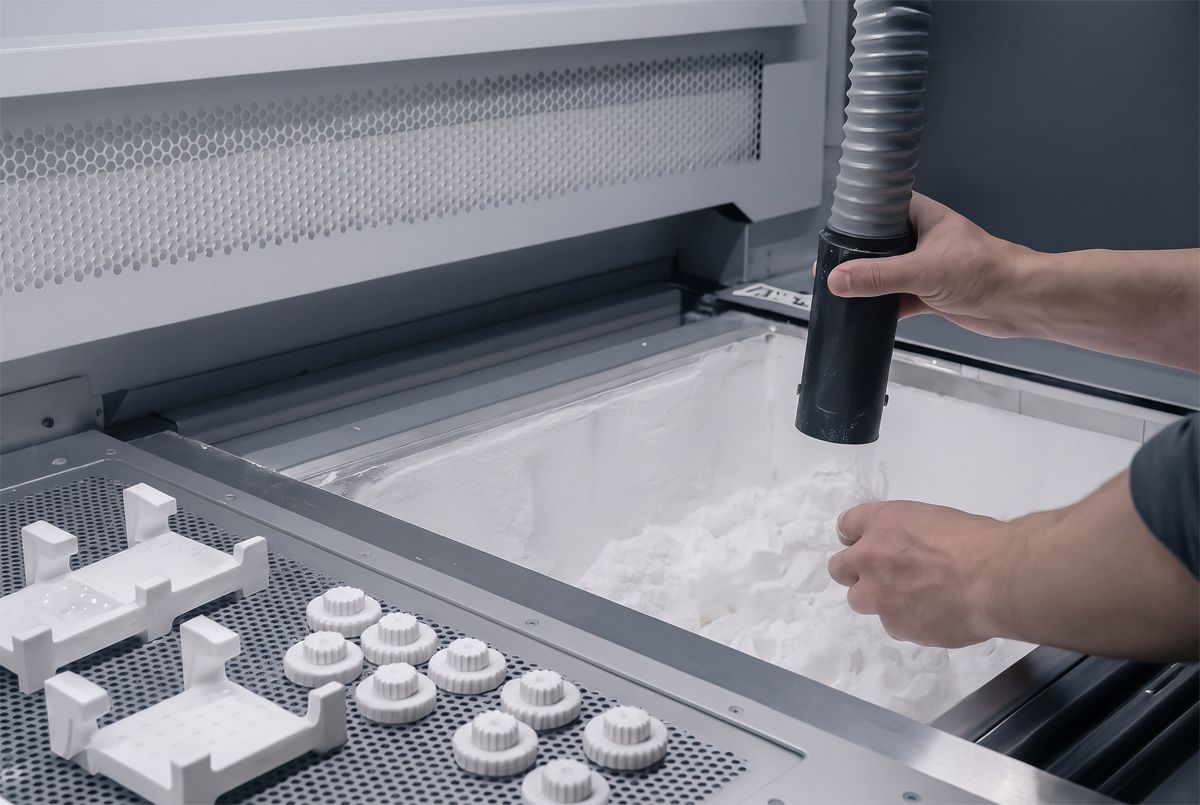
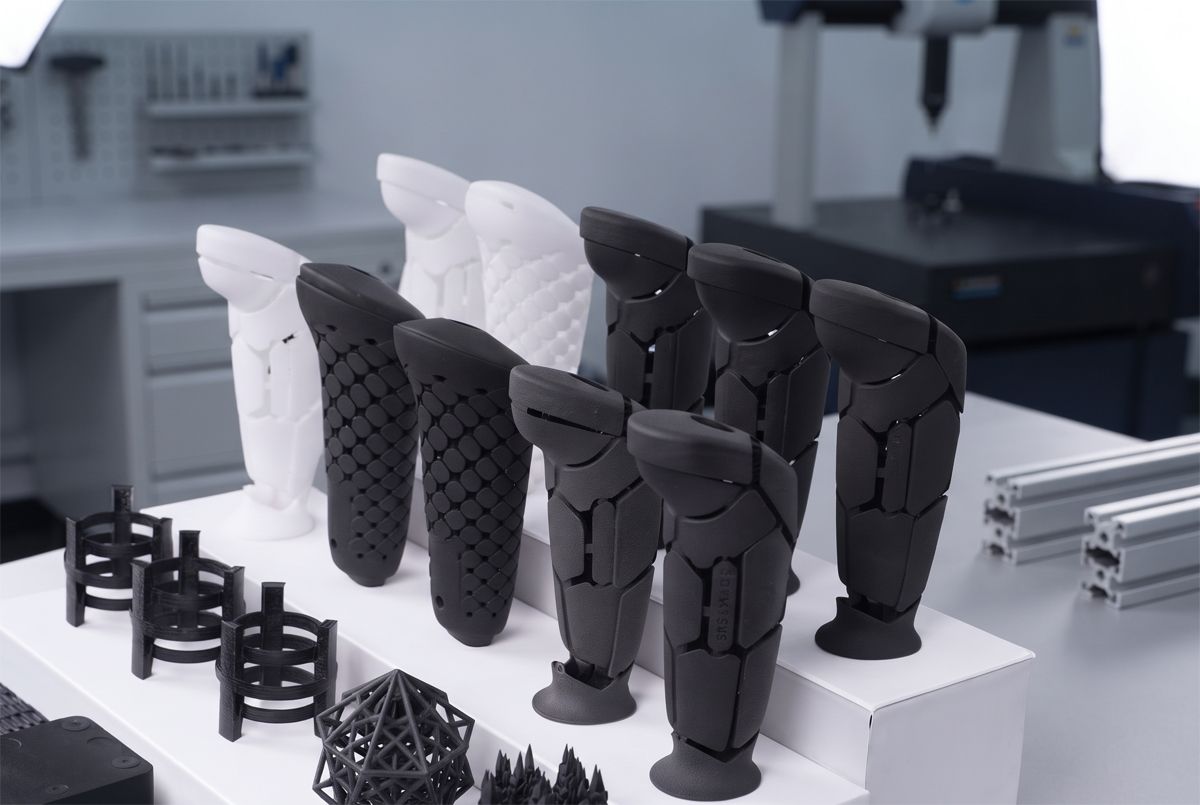
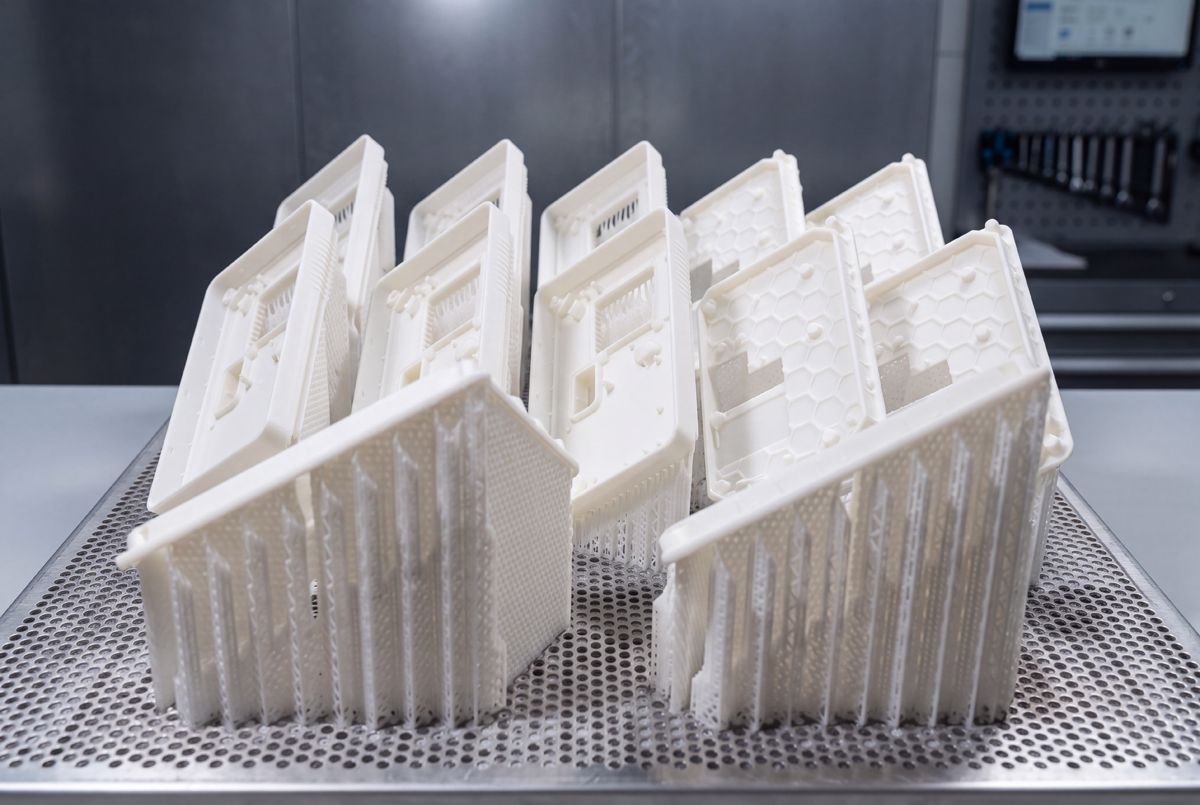
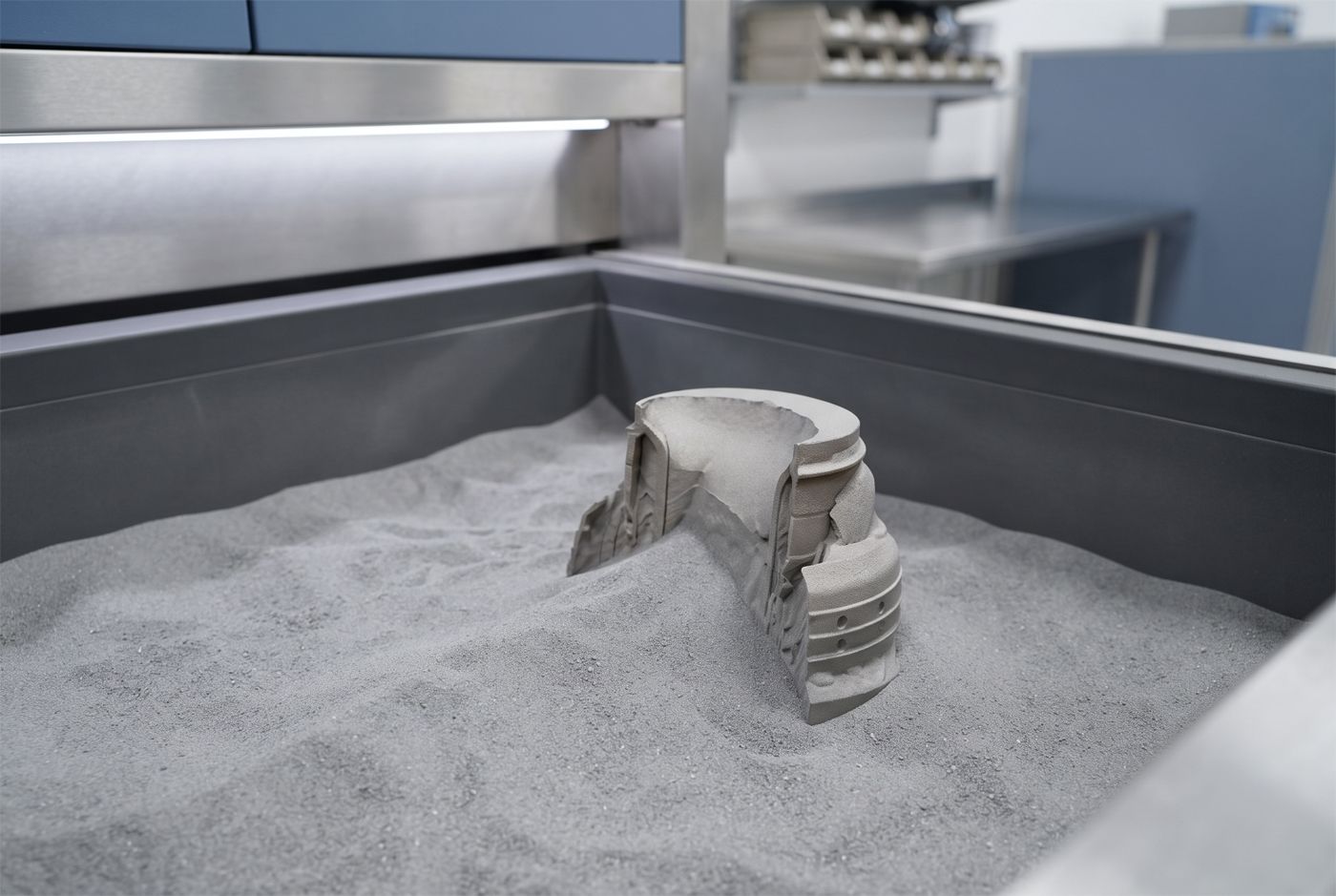
Selective laser sintering is where Snapfab sends parts that have to work for a living. A laser fuses nylon PA12 powder layer by layer inside a heated chamber, and the unfused powder supports the part as it grows. That means no support structures and total freedom to build the geometry the design calls for: internal channels, snap fits, living hinges, and lattices no other process can make.
Our expertise shows up before the laser ever fires. Snapfab engineers nest builds for density and thermal balance, orient each part so critical faces hold tolerance, and flag thin walls or trapped powder volumes during DFM review. After the build we handle bead blasting, dyeing, and vapor smoothing, and we hold the process steady enough to run repeat batches with consistent mechanicals. When a program is heading toward injection molding, we print in PA12 first so the test articles behave like the molded part will. SLS is our default answer for functional prototypes, housings, brackets, ducts, and low-volume production runs in the hundreds.
Pros
- No support structures, so complex geometry prints clean
- Tough, functional nylon with consistent mechanical properties
- Parts nest in 3D, making batch runs economical
- Great bridge material on the road to injection molding
Cons
- Grainy as-printed surface unless post-processed
- Color range is limited; dyeing works best in dark tones
- Enclosed volumes trap powder and need escape holes
- Large flat sections can warp without careful orientation
MJF: fine detail and speed at production volume.
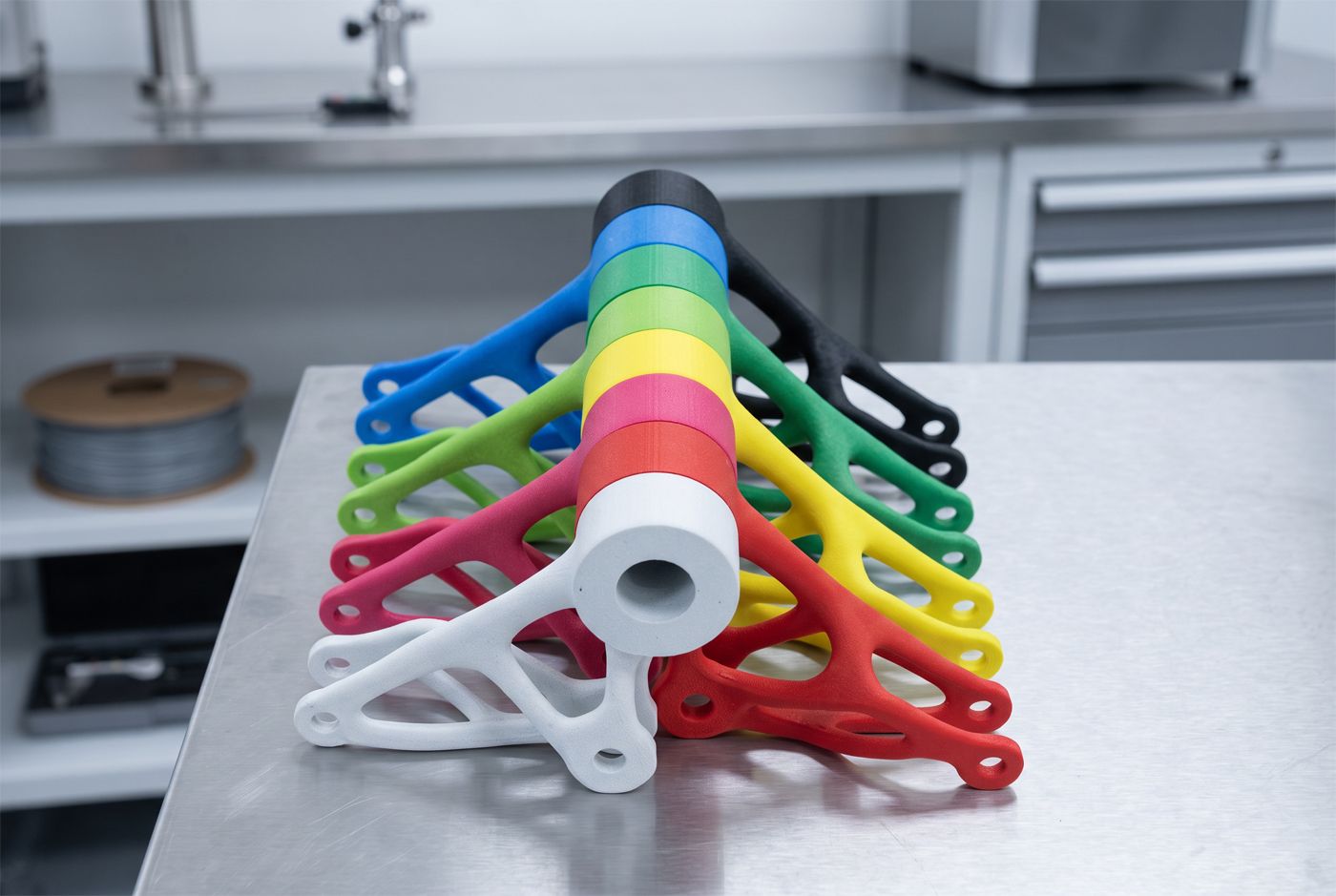
Multi jet fusion is the process we reach for when a program needs SLS-class toughness with sharper detail and faster turnaround. Instead of tracing each layer with a laser, MJF jets a fusing agent across the whole powder bed and cures an entire layer at once. The result is dense, nearly isotropic PA12 parts with crisp edges, fine lettering, and mechanical behavior you can trust in the field, delivered on cycle times that keep up with real production schedules.
Snapfab runs MJF as a production tool, not a prototyping toy. We quote it when part counts climb into the hundreds or thousands, because per-part cost drops fast as the build fills. Our team tunes packing density against thermal history so the thousandth part matches the first, and our finishing line takes parts from gray to a uniform, sealed black that customers ship as end-use product. During DFM review we check minimum feature sizes, wall transitions, and powder escape routes, and we tell you honestly when a part belongs on SLS, MJF, or a mold instead. Connectors, drone components, enclosures, clips, and end-use consumer hardware are everyday MJF work here.
Pros
- Fast layer cycles mean quick turnarounds at volume
- Fine feature resolution and crisp text or logos
- Dense, near-isotropic parts with reliable mechanicals
- Per-part cost falls sharply as builds fill up
Cons
- Parts come out gray; black dye is the practical finish
- Less material variety than some thermoplastic processes
- Powder removal adds handling on intricate internals
- Not the pick for very large single parts
SLA: the smoothest surfaces and the finest details in additive.
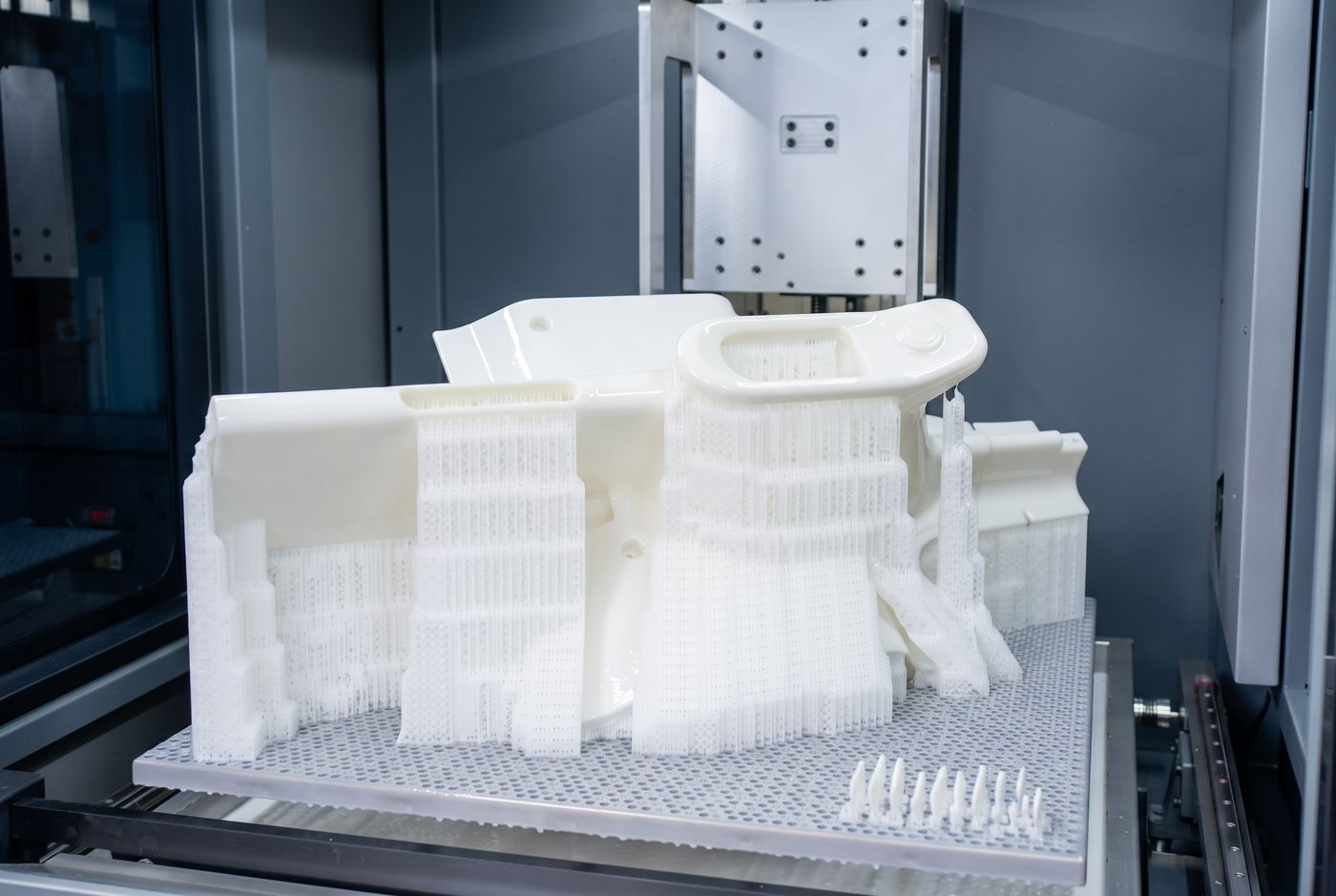
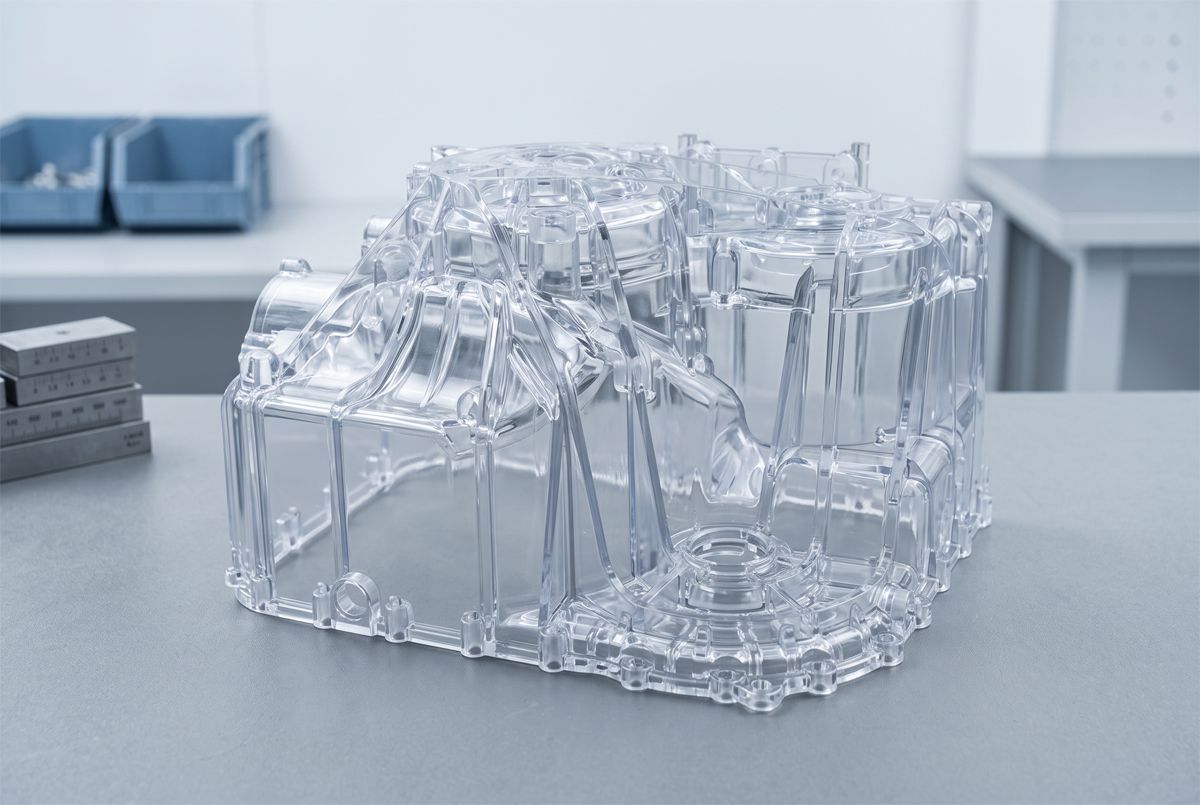
When the part has to look and feel finished, it goes on SLA. A UV laser cures liquid resin into layers so fine they disappear, producing glass-smooth surfaces, knife-sharp details, and features well under a millimeter that other processes simply cannot hold. Snapfab uses SLA for cosmetic prototypes, optical and clear components, fluidic manifolds, and the master patterns that feed our urethane casting line, where SLA's surface quality transfers directly into every cast part.
Resin selection is where our expertise pays off. We stock rigid, tough, high-temperature, and optically clear resins, and we match the resin to the job instead of printing everything in the same bottle. Our finishing team wet sands, primes, paints, and polishes; a clear SLA lens off our bench can pass for molded polycarbonate. We are equally honest about limits: SLA resins age under UV and prefer indoor service, so when a part needs long-term outdoor durability we steer it to SLS, MJF, or molding before it fails in the field.
Pros
- Smoothest surface finish of any additive process
- Finest feature resolution for small, intricate parts
- Optically clear parts possible with polishing
- Ideal master patterns for urethane casting
Cons
- Resins are more brittle than sintered nylon
- Parts age under prolonged UV exposure
- Limited heat tolerance on standard resins
- Supports are required and leave touch points to finish
Industrial 3D printing FAQs
What is industrial 3D printing?
Industrial 3D printing uses production-grade machines, engineering materials, and controlled processes to hold tolerances batch after batch. Desktop printers make shapes; SLS, MJF, and SLA make parts you can qualify and ship.
How do I choose between SLS, MJF, and SLA?
Pick by what the part has to do. SLS and MJF deliver tough nylon for end-use parts, while SLA wins on finish and detail. Unsure? Send the model and an engineer will recommend the process.
What makes Snapfab different from other 3D printing companies?
Every order gets a real DFM review before anything prints. We flag risky geometry and say honestly when a part belongs on a different process or a mold. Most 3D printing companies quote a file; we engineer the outcome.
Can an industrial 3D printing service handle production volumes?
Yes. SLS and MJF stay economical into the thousands because parts nest densely. We hold the process steady so the thousandth part matches the first.
How fast can I get parts?
Simple SLA parts routinely ship the same week; SLS and MJF batches run a few business days. Upload a model for an instant quote to start.
Put three industrial platforms behind your next part.
Upload a model to our industrial 3D printing service and get pricing in minutes. Every order gets a real DFM review before anything prints, so the part that arrives is the part you designed.
SLS · MJF · SLA · DFM review on every order